

Time Well Spent
- Tatsu Dojo
- Jun 26
- 4 min read
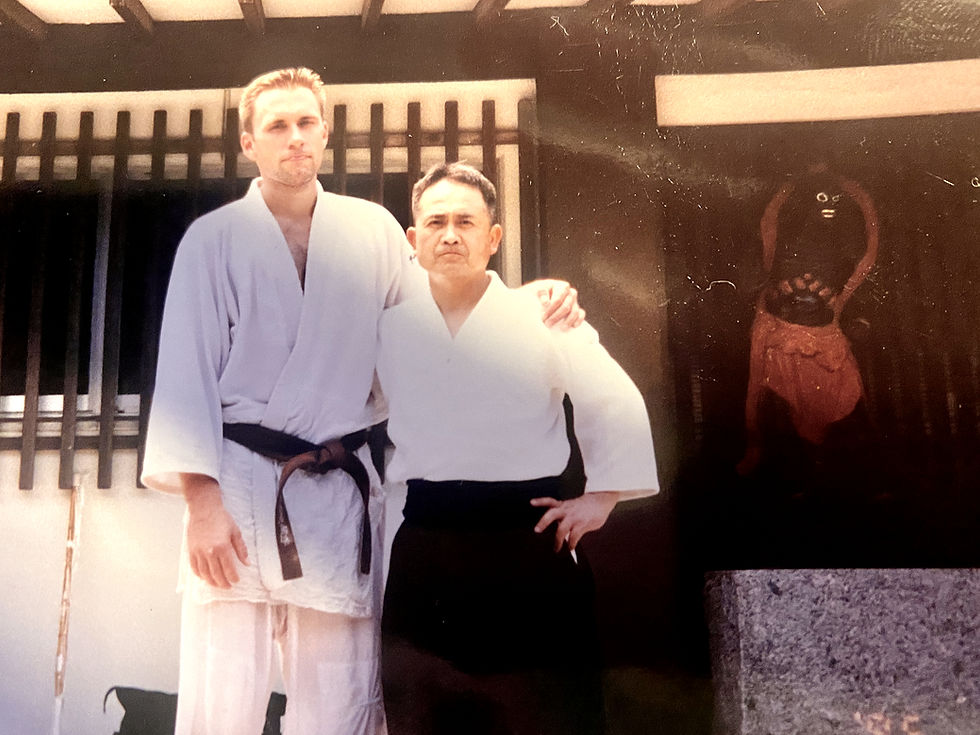
My family and I lived in Japan from 1992 - 1996 in the city of Misawa in Amori prefecture. Misawa is located in the northern aspect of Honshu, the middle island, and lies directly beneath Hokkaido, a very mountainous region. Misawa was made up of farmers, merchants, and a little bit of industry, but the primary source of revenue came from Misawa Air Base were I was stationed. This huge military installation is still home to Army, Navy, Marine and Air Force units and is like a city within a city. Despite the fact that it has been 30 years since we left, I’ll bet people stationed there today still call it, “little America,” because it is the only place you can get a burger and fries…Well, it’s probably different now.
My strong desire to live and study martial arts in Japan precipitated our assignment there. I knew it would be a once-in-a-lifetime adventure for our family; at least, that’s how I sold the idea to my wife who had no desire to live in the Orient. But it ended up being one of the most memorable places we ever lived because of the people met there. People like the head instructor of the Misawa Aikido Dojo, my good friend and sensei, Yamamoto-san. He was not the first budo (martial way) teacher I met, but he certainly left an impression.
Fortunately for me, the first time I visited the dojo, I was intercepted by the head student, another American service member and udansha (black belt). I don’t use the phrase, “intercepted” lightly, because one of the jobs of the head student was to meet, greet and instruct foreigners…gaijin like me on the proper ettiequte and customs of a Japanese dojo before we'd do or say somthing stupid. One of those customs dictated that I be introduced to Yamamoto-san. This happened after I uncomfortably sat in seiza (kneeling) for the entire class, something that John or Mike…I don’t remember his name, suggested. Despite his intense stare, obvious physical discipline and stern approach, upon meeting me, Yamamoto-san laughed, pointed at my knees and asked, “Itai?” Painful? He spoke a little English and at the time, I spoke zero Japanese, but John…or Mike sat there with us for an hour and interpreted. As I limped back to the base because all of the feeling in my legs was gone, I remember thinking, “I wanna be like John…or Mike.” I was also intrigued with the thought of training in aikido.
I had no intention of studying aikido in Japan. My goal was to find a Japanese Jujutsu school so that I could honestly say (to myself) that I’m a badass. Real Japanese Jujutsu is brutal; usually practiced on hardwood floors like karate, its primary purpose was close-quarters combat that resulted in broken bones and death. And to my good fortune, there were no jujutsu schools in Misawa. Karate, judo, kendo and sumo, but no jujutsu. I just happened to see people practicing what I thought was jujutsu in a small tatami room tucked away in the Misawa City Gym and I could see the training as I jogged by on a sultry August night. It was that night that I met Yamamoto-san and he received me warmly despite the fact that I left sweat marks on the tatami that had to be cleaned again after we finished talking.
Aikido is one of the most difficult martial arts to learn and comprehend. It is painful, exasperating, intricate and humbling. Because of its unique combat method of blending rather than clashing with an opponent, it takes years if not decades to master. Over the years, I’ve met other martial artists like myself, karate guys mainly who found aikido later in life and continue to have an appreciation for the art. But aikido is probably one of the least studied martial arts today. You see, there is no competition, no conquest. There are no trophies, to belts with tabs, no satisfying kicks or punches to the had that knock an opponent back. In fact, despite many years of practice, I still get things wrong all the time. And that’s the point. Same thing happens when I practice karate kata.
Here’s the thing; it’s not about winning and it’s not about being able to prove what a badass you are. In fact, it’s the exact opposite. It’s really about polishing your physical skills, your character and your determination. It’s also a fairly unique form of connection with other people. Like the one I had with Yamamoto-san. Despite the language and cultural barriers, our two families became close. And that period in my life is the foundation for the way I approach martial arts, my profession and people.
If you are thinking about trying a traditional martial art like aikido or karate, allow me to give you some advice. First, do your homework and find a good school that’s not all about beating people up or wining titles and trophies. Second, enter into any interaction with the head teacher with humility and an empty cup. Your conversation and first impressions will go a lot further. And, pay no attention to the influencers or wannabes who say that aikido and other martial arts suck. Their view is linear and narrow. Last, don’t worry about your age or physical deficits. A good teacher will work with you. Over time, you will meet amazing people and you will eventually learn more about yourself than just about anything else will teach you. And it will be time well spent.
Dave Magliano
Tatsu Dojo
Jissenkan Budo
Dojo Cho


Comments